
 Shelf 01
The Berry Apothecary
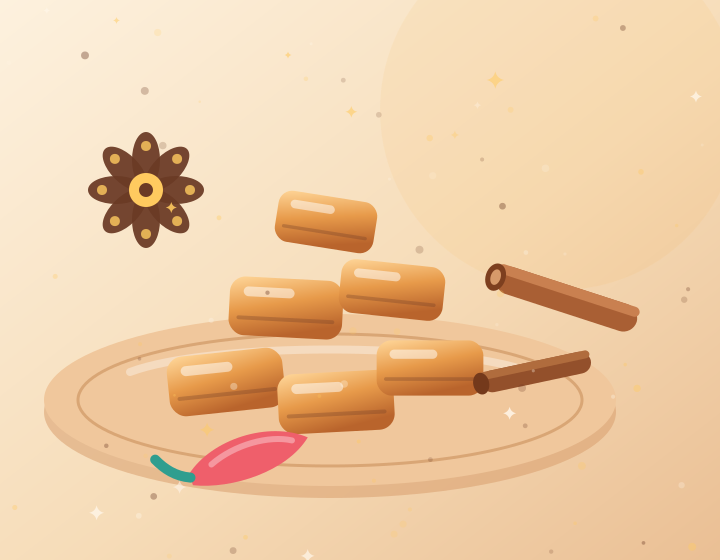
Blackberry and hibiscus cooked into a firm chew, then rolled in coarse sugar so the first bite crackles before the jam arrives.
- Hibiscus
- Blackberry
- Pink peppercorn
Issue 14 · The Flavor Architecture Papers
Candi & Clove is a confection atelier tucked into a converted print shop in Asheville, North Carolina. We cook sugar the slow way — one flavor layer at a time — then write down everything we taste. This is the journal of that work: glossy lollipops, botanical candies, and the exact temperatures that make sugar behave.

The Atelier Index
Every batch leaves the kettle with a job to do: lift a mood, end a meal, or simply look beautiful in a paper twist. Here is what is resting on the shelves this season.
Shelf 01
Blackberry and hibiscus cooked into a firm chew, then rolled in coarse sugar so the first bite crackles before the jam arrives.
 Shelf 02
Muscovado caramel poured thick, cut into soft cubes, and finished with star anise ground the same morning it is used. Warm, resinous, a little grown-up.
 Shelf 03
Rose geranium and violet folded into a fondant so light it nearly disappears. We decorate each one with a pressed sugar petal, one at a time.
Field Notes
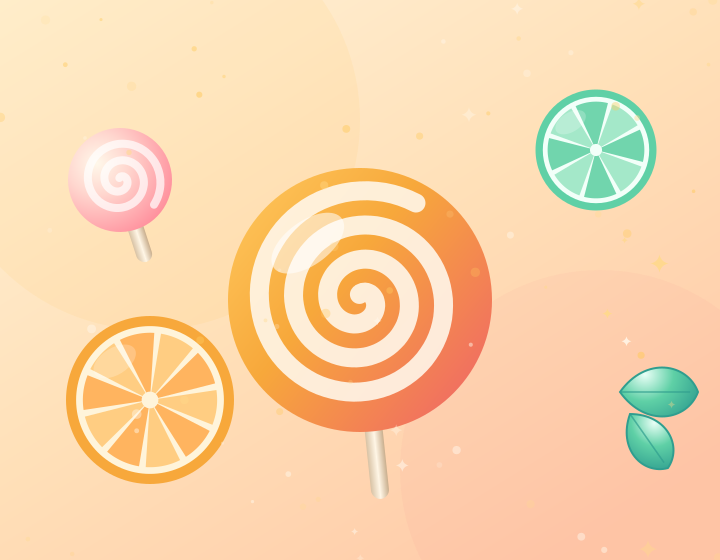
A lollipop looks like the simplest object in the candy case. It is not. A good swirl is a small piece of engineering: three pours of slightly different sugar density, each cooled just enough to hold its edge, layered so that the spiral reads from the front and stays honest from the side.
We start with flavor oils cut into a neutral syrup, add color only to the outer pass, and pull the whole disc across a marble slab that we chill overnight. The marble matters more than the recipe. Warm stone makes a swirl that slumps; cold stone gives the sugar a fine, glassy skin that snaps clean against the teeth.
A swirl is not decoration. It is a record of how fast the sugar cooled, written in caramel lines for anyone who looks closely. — Marisol Okonjo, founding confectioner
The finish is deliberately unfinished: a lip of sugar left unsmoothed, a tiny amber gradient where the last pass met the first. Those imperfections are the only honest signature a hand-poured candy can offer.
Interactive · Widget 01
Choose a flavor family to see the tasting notes our panel wrote down, the texture we aim for, and the small things we like to serve beside it.
Six families · updated each season
Sweetness tracks sugar weight, brightness tracks the volatile top notes that lift a flavor, and warmth tracks the resinous spice base. A good candy usually leans on two of the three.
Now tasting
A sunlit shell that cracks like thin ice over a honeyed chew.
Glassy shell, softly tacky centre
Pair with shaved sea-salt dark chocolate and a glass of iced verbena tea.
From the Archive
Photographs and drawings from the bench: the flat lay we set for a winter tasting, and the herbal sticks that started as a mistake with a jar of garden mint.


Interactive · Widget 02
Sugar does not need a recipe so much as a thermometer and a little patience. Click a stage to see what the syrup is doing, what it feels like in cold water, and which candies live there.

230°F110 °C
A spoon lifted from the pan drips a fine, unbroken thread that snaps when you touch it.
Keep the pan still. Stirring here invites crystals that turn a clear syrup cloudy.
We drop a teaspoon of syrup into iced water and let the shape tell us the story. Thermometers drift; cold water does not.
How we work
Three promises we make to every batch, written on a card above the marble slab and read out loud to new apprentices on their first morning.
Nothing gets tinted until it tastes right on a cold spoon. If a color needs rescuing, the batch goes back to the kettle.
No batch larger than what two people can wrap before noon. Past that, the swirls start to slouch and the notes get sloppy.
Every pour earns a notebook entry: what we cooked, how it cracked, what we would change. The archive is the real recipe.
On the desk
Half-finished thoughts from the notebook. Longer pieces live in the seasonal print edition, which we fold by hand on rainy Tuesdays.
Alone, hibiscus reads flat and a little dusty. Paired with a hard berry note and one peppercorn, it opens up into something rounder than the sum of its parts.
Sugar petals are beautiful and slightly maddening: too dry and they curl, too humid and they collapse into the fondant. Our third attempt finally held.
Every hand-poured disc cools at its own pace. Learn what the lines are telling you and you can correct the next pour before it reaches the stone.